
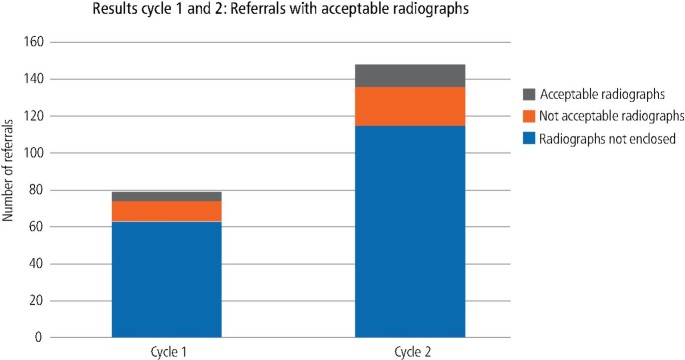
Aims Some children undergoing dental extractions under general anaesthesia (GA) require repeat GA because teeth with undiagnosed caries are left in situ. Routine pre-operative radiographs can identify interproximal decay in teeth that appear sound on clinical examination. The aim of this service evaluation was to assess: 1) if children undergoing GA for dental extractions had diagnostic radiographs when referred; 2) if new radiographs were taken; 3) if treatment plans were altered; and 4) if any repeat GAs were required.
Methods Two cycles of retrospective data collection were conducted (Cycle 1: July–October 2023; Cycle 2: February–May 2024) to identify the presence of diagnostic radiographs. The number of teeth removed was compared to the initial referral to identify changes in treatment plans.
Results Of the radiographs taken at hospital, 92% were taken at assessment and 8% on the day of GA. However, 14% of children proceeded to GA without any radiographs. Changes to treatment plans were common: 68% of children had additional teeth removed, and overall, a total of 21 permanent molars were added to treatment plans when radiographs were available.
Conclusions This service evaluation demonstrates that treatment plans are significantly more likely to change in the presence of radiographs, reinforcing their crucial preoperative importance in reducing the risk of repeat GA. While children with poor cooperation may inevitably undergo GA without radiographs, clinicians should strive to obtain pre-operative radiographs given their pivotal role in comprehensive treatment planning.